Termite damage and dry rot repair in Fresno
The wood gets rebuilt after treatment, so new lumber never goes in over a live colony.
What the termites leave behind
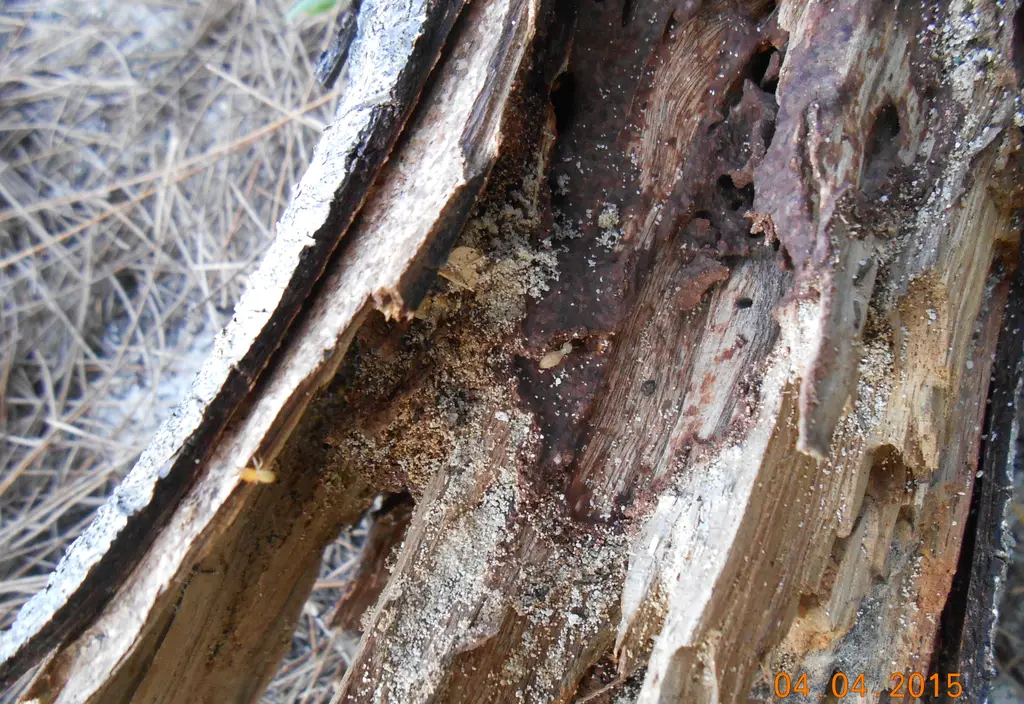
Treatment kills the colony. It does not give you your fascia back. Termite damage repair in Fresno is the second half of the job: putting back the wood the insects took. That means framing with galleries chewed through it. Rafter tails eaten hollow from the inside. Subfloor that flexes when you walk across it.
Good repair work starts with paper, not a saw. The inspection report documents what is damaged, what is still active, and how far the trouble runs past what you can see. The repair scope should come from those findings. Wood gets replaced because the report shows it is compromised, not because someone eyeballed it from a ladder.
Dry rot rides along on most of these jobs. It is a fungus, not an insect, but it feeds on the same damp wood that attracts subterranean termites. The inspection that maps one usually finds the other. Around Fresno, half the “termite damage” turns out to be rot, or both at once, layered in the same board.
One more hard fact belongs up front. Homeowners insurance almost never pays for any of this, because insurers call it preventable maintenance. The insurance guide has the long answer.
What gets repaired
-
Fascia and rafter tails
The boards along the roof edge. Termites and dry rot hit them first and hardest.
-
Eaves and trim
Overhangs and exterior trim that take the most sun and weather.
-
Door and window frames
Soft sills and casings replaced, not patched over.
-
Subfloor and floor framing
Spongy floors in raised-foundation homes, traced back to the joists.
-
Siding and structural framing
Anything from a single board to studs and headers, matched to the house.
-
Patio covers and pergolas
Posts and beams that live closest to the soil and the sprinklers.
Treat first, then rebuild
Rebuilding untreated wood is how you pay for the same fascia twice. A live drywood colony does not care that the board is new. A subterranean colony in the soil will send workers back up the same stem wall to the fresh subfloor. New lumber over active termites is not a repair. It is a delivery.
That is why the usual order in this trade is inspect, treat, then rebuild. The inspection sorts live activity from old evidence. Treatment matched to the species handles the live colony. That might mean soil treatment, spot treatment, or a full tent. The rebuild comes after, ideally once time or a re-check has confirmed the treatment held. On a spongy-floor job, that order protects the most expensive part of the work. On a fascia job, it is the difference between a repair and redecoration.
The same discipline works in reverse. Not every ugly board needs replacing. Termite galleries that stopped near the surface can leave a board structurally sound. So can old dry rot that has been bone-dry since a roof leak was fixed. Wood gets replaced because it is weakened, not because it looks bad. A repair scope that cannot explain the difference is padding the bill.
Clearance repairs when a sale is waiting
A big share of repair work in this trade arrives with an escrow number attached. A WDO inspection has come back with Section 1 findings. Section 1 is the active category: live termites, live fungus, and the damage they caused. The lender wants those items fixed before closing. Suddenly a fascia board is standing between a family and their keys.
These jobs are about paperwork as much as carpentry. The repairs need to match the report’s findings, item for item. When the work is done, a completion certificate documents it for the lender and escrow. That certificate is what lets the clearance issue and the sale move forward. However the repairs get handled, the paper trail is the part escrow cares about. Buyers and sellers might see this machinery once in a lifetime. It runs every week in Fresno real estate.
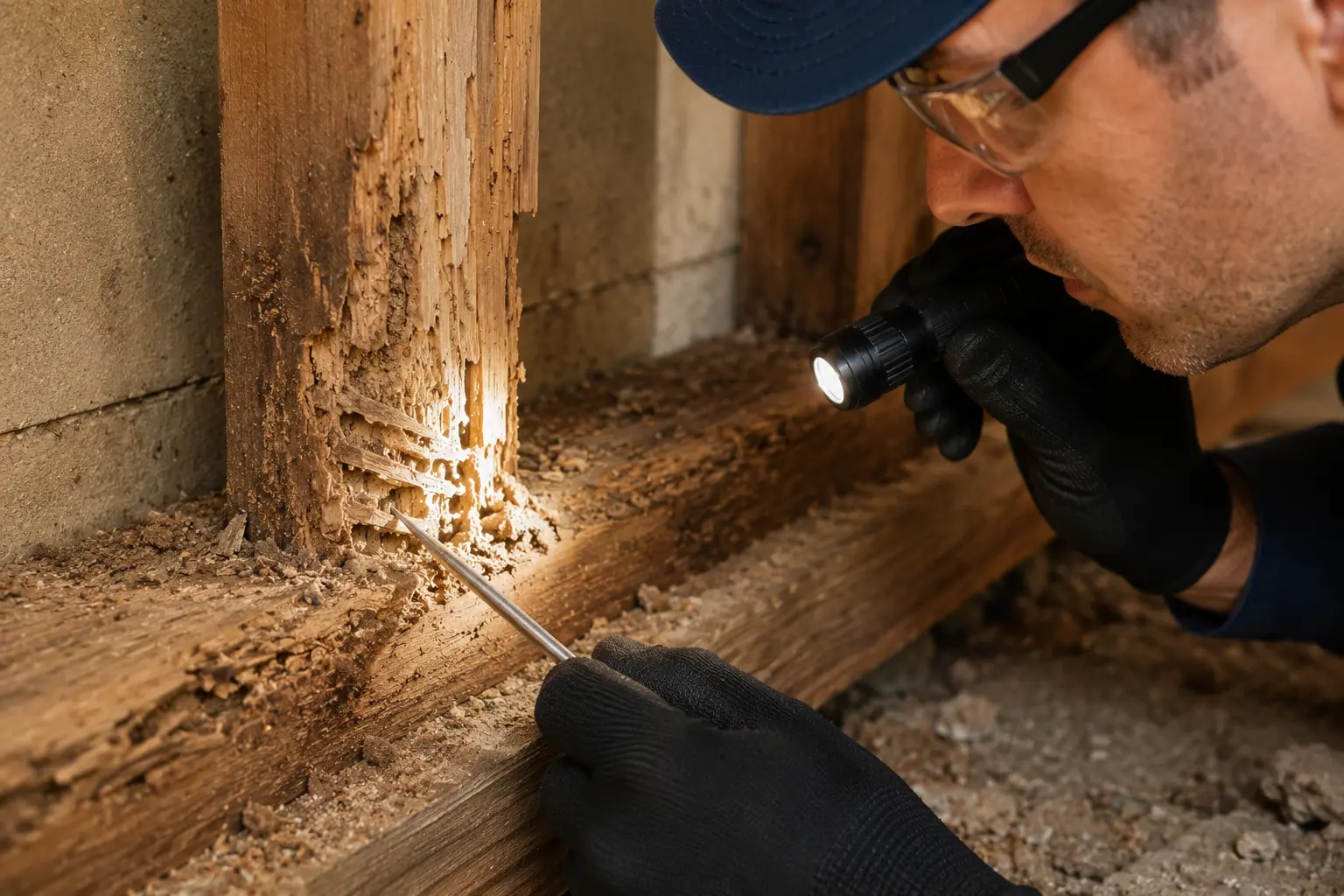
Found damage? Get it inspected before anyone rebuilds over it.
The repairs Fresno houses actually need
Fresno repair work has a familiar shape. Start with midcentury fascia. The ranch homes built in the 50s and 60s were trimmed with solid old-growth boards. Those boards have now taken seventy years of Valley sun. Once drywood termites or rot get a foothold, whole runs need replacing, not single boards.
Swamp coolers left their mark on the same houses. Decades of roof-mounted coolers meant water lines, overflow drips, and holes cut through the roof. The framing under an old cooler mount is a dependable place to find rot.
Older raised-foundation homes bring the floor work. Plumbing leaks under bathrooms and kitchens meet subterranean termites, and the subfloor and joists pay for it. And every era of house contributes patio covers. They sit close to the soil, catch sprinkler water twice a day, and get rebuilt more often than anything else in town.
Frequently Asked Questions
Can the damage just be repaired without treatment?
No, not if the termites are still active. New lumber over a live colony gets eaten the same way the old lumber did. Subterranean termites will climb the same stem wall right back up to the fresh wood. Treat first, confirm the activity has stopped, then rebuild.
Does homeowners insurance cover termite damage?
Almost never. Insurers treat termite damage as preventable maintenance, not a sudden accident, so repairs usually come out of the homeowner's pocket. That is the practical case for regular inspections. Catching activity early keeps the repair small.
How disruptive are termite repairs?
Most termite repair is outside work. Fascia, eave, and trim jobs happen at the roofline, and you can stay home the whole time. Subfloor and framing repairs are messier. A bathroom floor rebuild can put that room out of use for a few days.
How is the repair scope decided?
It should come from an inspection report, not a guess from the curb. The report documents which wood is damaged and whether anything is still active, and the repairs then match those findings. That paper trail matters most in a home sale, where the lender wants finished work documented.