Fresno termite control without the guesswork
A free inspection tells you which termite you have, drywood or subterranean, and the treatment follows from that.
The species decides the treatment
Termite control in Fresno is mostly about subterranean termites. They live in the Valley’s clay soil and follow moisture. Fresno summers hit a hundred degrees with almost no rain, so the soil should dry out. It doesn’t, because we water it. Lawns, drip lines, and flower beds keep the dirt against the foundation damp all summer. That damp strip is right where these termites do best.
Drywood termites are here too. They are less common than on the coast. But they turn up steadily in older attics, eaves, and garages, from the Tower District out to Sunnyside.
The species decides everything that follows. A subterranean colony lives in the ground, so it gets treated at the soil. A drywood colony lives inside the wood, so it gets treated in the wood. That can mean a small spot job or a whole-house tent. A company that quotes a tent or a spray before naming the species is guessing. And it is guessing with your money.
Good termite work starts with a termite inspection. The inspector checks the attic, crawl space, garage, eaves, and the ground along the foundation. You get a written report of what is actually there. Treatment then gets matched to the species and to how far it has spread. And where termites have already eaten something, the damaged fascia, framing, or subfloor gets rebuilt after treatment, not instead of it. Fascia is the board that runs along the roof edge, and termites love it.
One thing is worth knowing up front. Homeowner inspections are free. Escrow termite inspections for a home sale are not. An escrow report is a formal document that buyers, agents, and lenders all rely on. It is priced as the professional service it is. If you have a closing date on the calendar, start on that page.
Our Services
-
Termite Inspections
A trained inspector checks the attic, crawl space, eaves, and foundation, then tells you plainly what's there.
Learn more
-
Termite Treatment
Spot treatments, soil treatments, and whole-structure options, recommended based on what the inspection actually finds.
Learn more
-
Whole-House Fumigation
Tent fumigation reaches drywood termites everywhere in the structure. It's the thorough fix for widespread infestations.
Learn more
-
No-Tent Drywood Treatment
Targeted drywood treatment without the tent. When the infestation is accessible, you stay in your home while we work.
Learn more
-
Subterranean Termite Treatment
Soil-dwelling colonies stopped at the ground they come from, with liquid barrier and baiting treatments.
Learn more
-
Heat Treatment
Whole-structure or single-room heat that kills drywood termites without fumigant chemicals or an overnight stay elsewhere.
Learn more
-
Escrow & WDO Inspections
Wood-destroying organism reports for home sales, documented and delivered to everyone in the transaction.
Learn more
-
Termite Damage Repair
Damaged framing, eaves, fascia, and trim repaired once the termites are gone.
Learn more
Two kinds of termites, two different treatments
- Where they live
- In the soil under and around the house
- Signs they leave
- Mud tubes on foundation walls and piers
- How they're treated
- At the soil: liquid barrier or bait
- Where they live
- Inside attic wood, eaves, and window frames
- Signs they leave
- Frass (dry pellets) and shed wings
- How they're treated
- In the wood: spot treatment, heat, or tent
| Species | Where they live | Signs they leave | How they're treated |
|---|---|---|---|
| Subterranean termites | In the soil under and around the house | Mud tubes on foundation walls and piers | At the soil: liquid barrier or bait |
| Drywood termites | Inside attic wood, eaves, and window frames | Frass (dry pellets) and shed wings | In the wood: spot treatment, heat, or tent |
Not sure which one you have? The guide to telling drywood from subterranean termites walks through each sign.
How a termite job usually goes
- 1
Inspect
An inspector checks the attic, crawl space, garage, eaves, and the ground along the foundation to see what is really there.
- 2
Written report and recommendation
The findings come in writing. The recommendation follows from them, and there is nothing to sign on the spot.
- 3
Treatment matched to the species
Soil treatment for subterranean colonies. Spot work, heat, or fumigation for drywood, depending on how far it has spread.
- 4
Follow-up re-check
A re-inspection later is common in this trade. New colonies arrive from the surrounding soil, not from anything you did wrong.
Buying or selling a home in Fresno?
Escrow termite inspections and WDO reports timed to your closing date and shared with everyone in the transaction.
Why an inspection before the quote protects you
Good termite work runs the same way anywhere. The inspection comes first, and the quote follows from it. The report names the species and how far it has spread. The recommendation has to follow from those two facts. That means you can check it yourself. Say the report shows one reachable drywood gallery, the tunnel termites chew inside the wood, in a garage rafter. The honest fix is a spot treatment, not a tent. But if it shows frass in three rooms and the attic, spot work would just be a cheaper way to fail. Frass is the pile of dry sawdust-like pellets drywood termites push out of the wood. Straight answers cut both ways, and the written report is what lets you check them.
Termite work in California is licensed structural pest control work. Anyone opening your walls or trenching your foundation should hold that license. Checking it takes two minutes on the state’s license lookup site. It is a low bar. Plenty of door-knockers still don’t clear it.
Repair is the follow-on to treatment, not a substitute for it. When the report turns up chewed fascia or a spongy subfloor, termite damage repair comes after the colony is dealt with. Nobody should rebuild over live termites. Fresno’s older neighborhoods show why the diagnosis matters so much. A 1930s bungalow near Fresno High has had ninety years to collect termites, dry rot, and a past owner’s patches over both. Sorting out which is which is diagnostic work, not carpentry.
Not sure which termite you even have? Mud tubes and frass point in opposite directions. Mud tubes are the pencil-wide dirt tunnels subterranean termites build up a wall. The guide to telling drywood from subterranean termites walks through the signs one by one.
What Fresno homes give termites to work with
Fresno gets about eleven inches of rain a year. Almost none of it falls between May and October. Then we keep the landscaping alive with irrigation all summer. For subterranean termites, that is ideal. The soil against the stem wall, the short concrete wall the house sits on, stays damp in a climate that should have dried it out. Sprinklers hitting the stucco do the same job. So does a planter mounded against the house, or dirt built up over the weep screed, the metal strip at the base of the stucco that lets water escape. Most of the subterranean activity an inspector finds traces back to one of those.
The housing stock splits the problem in two. The prewar neighborhoods sit on raised foundations with crawl spaces. That is the Tower District, Fresno High, and Old Fig Garden. Those homes show the classic evidence: mud tubes climbing the piers and stem walls. Anyone willing to crawl under with a flashlight can spot them. From the 1970s on, Fresno built on slab. That covers the tract growth in east Fresno and Sunnyside, up through Woodward Park to the Clovis line. Slab homes have no crawl space, so there are no tubes to find down there. Termites come up through hairline cracks in the slab and around plumbing pipes instead. The first visible sign is often a blistered baseboard or a door frame that has quietly gone soft.
The calls follow the calendar. The first warm rain in October pushes out subterranean swarmers, the winged termites that fly off to start new colonies. For a couple of weeks, the most common call in town is wings on a windowsill or a bathroom floor. Hot, still afternoons in late summer do the same for drywood swarmers. The rest of the year brings slower finds. Frass piles on a garage floor. A fascia board that crumbled when a painter leaned a ladder on it. A surprise finding on a WDO report in the middle of escrow.
Cost is usually the second question on any of those calls. The honest answer is that it depends on three things. Which species it is, how far the colony has spread, and how the house is built. A free termite inspection pins down all three. Spot work on a small patch of drywood damage sits at one end of the scale. Whole-house fumigation sits at the other. The treatment options page explains what pushes a job toward each.
Areas We Serve
- Fresno
- Clovis
- Sanger
- Fowler
- Kerman
- Madera
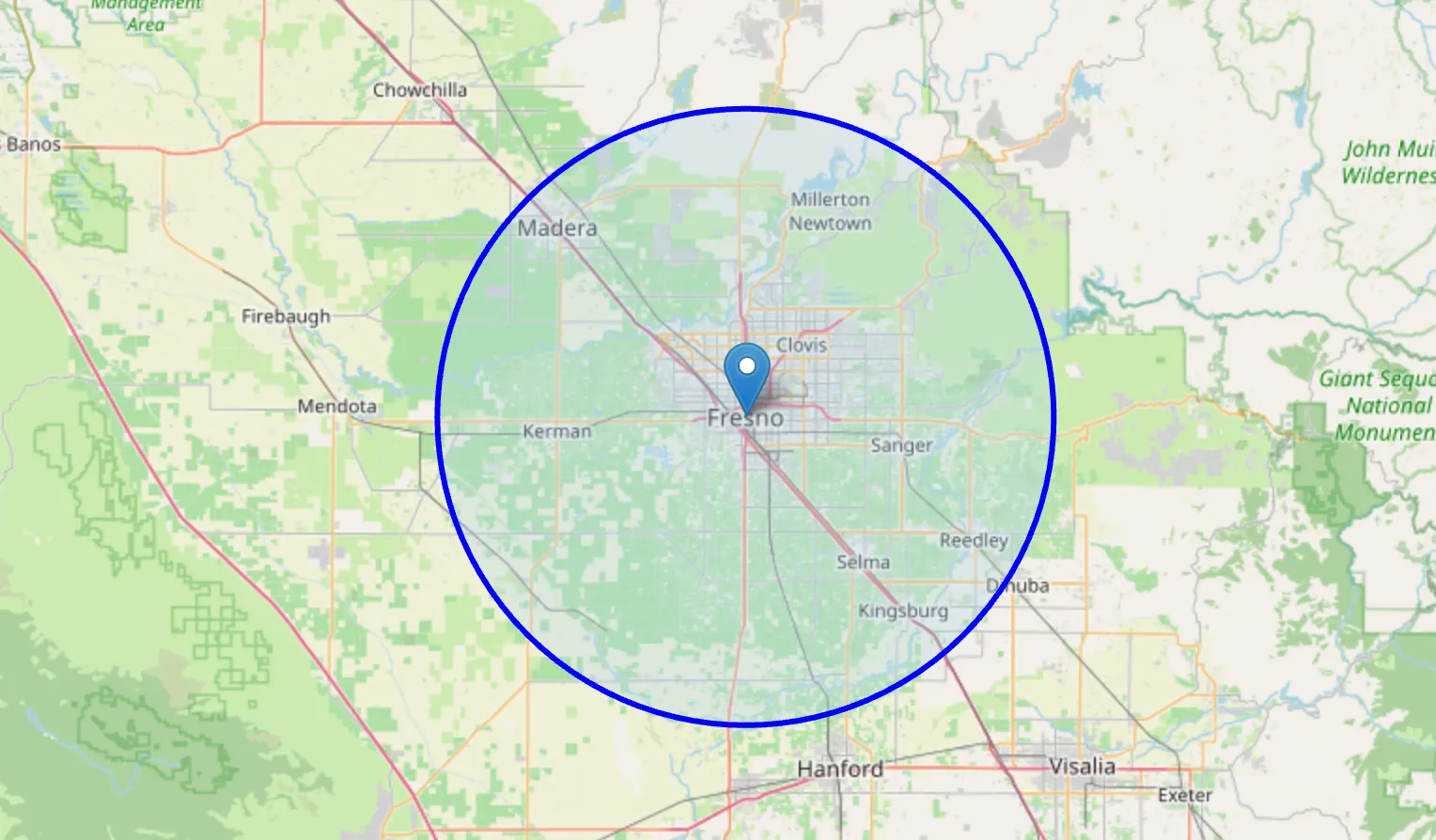
Find local details for each community on our service-area pages.
Frequently Asked Questions
How do I know if I have drywood or subterranean termites?
They leave different evidence. Subterranean termites live in the soil and build mud tubes up foundations and piers to reach wood. Drywood termites live entirely inside the wood and push out small piles of dry, pellet-like droppings called frass. The two are treated completely differently, which is why an inspection is the first step: it settles which one you're dealing with.
What does it mean if I see flying termites or piles of wings?
Winged termites, called swarmers, are how a mature colony spreads. A swarm indoors, or piles of identical shed wings on sills and floors, means an established colony is in or very near the structure. Of all the signs, this is the one worth acting on quickly.
Do I always need to tent my house for termites?
No. Tenting is for widespread or hard-to-reach drywood infestations. Subterranean termites are treated at the soil, never by tenting, and an accessible drywood infestation can often be treated locally without a tent. What your house needs depends on the species and how far it has spread, and that's what the inspection determines.
Does homeowners insurance cover termite damage?
Almost never. Insurers classify termite damage as preventable maintenance rather than a sudden event, so repairs usually come out of pocket. That's the practical argument for periodic inspections: catch activity early instead of discovering it during a remodel or a home sale.
What happens during a termite inspection?
An inspector goes through the accessible areas where termites show up first: attic, crawl space, garage, eaves and fascia, window and door frames, and the foundation perimeter. They're looking for mud tubes, frass, damaged wood, and swarm evidence. Findings go into a written report along with a recommendation, so you know what was found and what it means before any treatment decision.
How long does termite treatment take?
It depends on the method. Localized drywood treatments and liquid soil treatments are usually done in a day. Whole-house fumigation runs across three days: tenting, aeration, and a clearance check before re-entry. Heat treatments generally finish the same day.